Cambodia has included the development of small and medium-sized enterprises in its national strategy. What is a Chinese power company doing
Introduction
In October, Cambodia successively introduced two policies targeting small and medium-sized enterprises: the National Strategy for the Development of Small and Medium sized Enterprises from 2026 to 2030 was released on the 22nd, and the first National Forum on Financing for Small and Medium sized Enterprises was held on the 27th. The simultaneous efforts of policies and finance are worth paying attention to for enterprises operating in Cambodia.
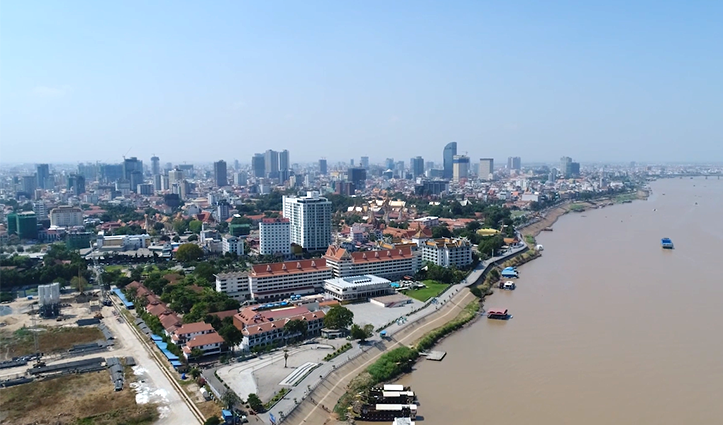
Policy signal: Small and medium-sized enterprises have officially become the "national engine"
On October 22, the Cambodian government officially released the National Strategy for the Development of Small and Medium sized Enterprises from 2026 to 2030. Prime Minister Hong Manet stated at the press conference that this five-year strategy aims to promote small and medium-sized enterprises to become an important force in national development, help Cambodia improve productivity, achieve economic diversification, and strive to graduate from the list of least developed countries by the end of 2029.
The strategy covers four pillars: improving the business environment and legal supervision; Enhance production and service capabilities, promote technological applications and innovation; Enhance the competitiveness of enterprises in domestic and international markets; Improve the relevant software and hardware infrastructure.
On October 27th, five days later, the first National SME Financing Forum in Cambodia opened, presided over by Vice Prime Minister and Minister of Finance and Economics Anpeng. The forum, with the theme of "Accessibility of Financing for Small and Medium sized Enterprises", urges state-owned and private banks to expand financing support and provide loans with appropriate amounts and reasonable low interest rates to small and medium-sized enterprises.
Supporting these actions is a heavy set of data: Cambodia currently has over 750000 operating units, more than 60000 small and medium-sized enterprises, employing nearly 3 million people, contributing about 63% of the country's gross domestic product and over 70% of non-agricultural employment opportunities.
Understanding pain points: beneath the surface of difficult financing lies "cost" and "delivery"
Vice Prime Minister Anpeng also urged companies to improve internal management, prepare accurate and complete financial statements, and create conditions for applying for loans at the forum. Minister of Industry and Technology Innovation Han Wandi emphasized that one of the core strategies is to meet domestic demand by enhancing production capacity, promoting import substitution, and facilitating the integration of enterprises into regional and global value chains.
Putting these two sentences in a manufacturing workshop will lead to two very specific issues: the proportion of electricity costs in production costs, and the equipment delivery time and power supply stability.
For a Chinese owned factory in Cambodia, unstable electricity and a production line shutdown could result in losses that could eat up a month's profit; The equipment relies entirely on imports, waiting for shipping schedules, customs clearance, and debugging, and the window for expanding production is missed like this. To achieve stable development, it depends on whether the delivery can be faster and the cost can be lower for the enterprise.
Wisdom's answer: build "one-stop" at the customer's door
Wisdom Power has been deeply rooted in Cambodia for 11 years. It has built double bases in Xigang and Gogong, built its own factory buildings and office buildings, and its business covers the whole process of production, sales, installation, operation and maintenance of electrical equipment. Its customers are all over Xigang Special Economic Zone, Zhejiang Special Economic Zone, Bogue Special Economic Zone and many other enterprises inside and outside the region. Compared to the direction of this policy, three things are in line:
One: Domestic manufacturing+local stocking
Change the delivery time from 'waiting for sea freight' to 'waiting for debugging'. The main products, such as box type substation and high and low voltage cabinet, have been produced and inspected in domestic factories in Wisdom, and the quality is controllable throughout the process; Commonly used power products and equipment are kept in local warehouses in Cambodia all year round. Customers can directly pick up and ship them when needed, without having to wait for weeks for shipping schedules. The pace of production expansion is in their own hands.
Secondly, from installation to power transmission, a complete one-stop process is carried out
In Cambodia, the construction or expansion of factories involves complicated procedures and multiple links for handling electricity, and language and standard deviations are causing companies to run through the wrong path. Wisdom is familiar with the local grid standards and installation reporting process, and provides one-stop delivery of scheme design, equipment installation, commissioning and power transmission. Customers only need to put forward power demand, and the rest will be handed over to Wisdom. The time saved is the order that was snatched back.
Thirdly, the operation and maintenance guarantee ensures that every loan is invested with peace of mind
Banks look at financial statements and also consider whether assets can continue to be produced. Regular inspections, preventive testing, and rapid response to faults ensure the long-term stability and availability of power distribution assets, thereby ensuring the certainty of the company's production capacity.
Conclusion
Policies provide direction, finance provides blood, and true growth ultimately depends on every device and every kilowatt hour of electricity. Wisdom Power strives to become the eternal light behind Chinese manufacturing enterprises in Cambodia.